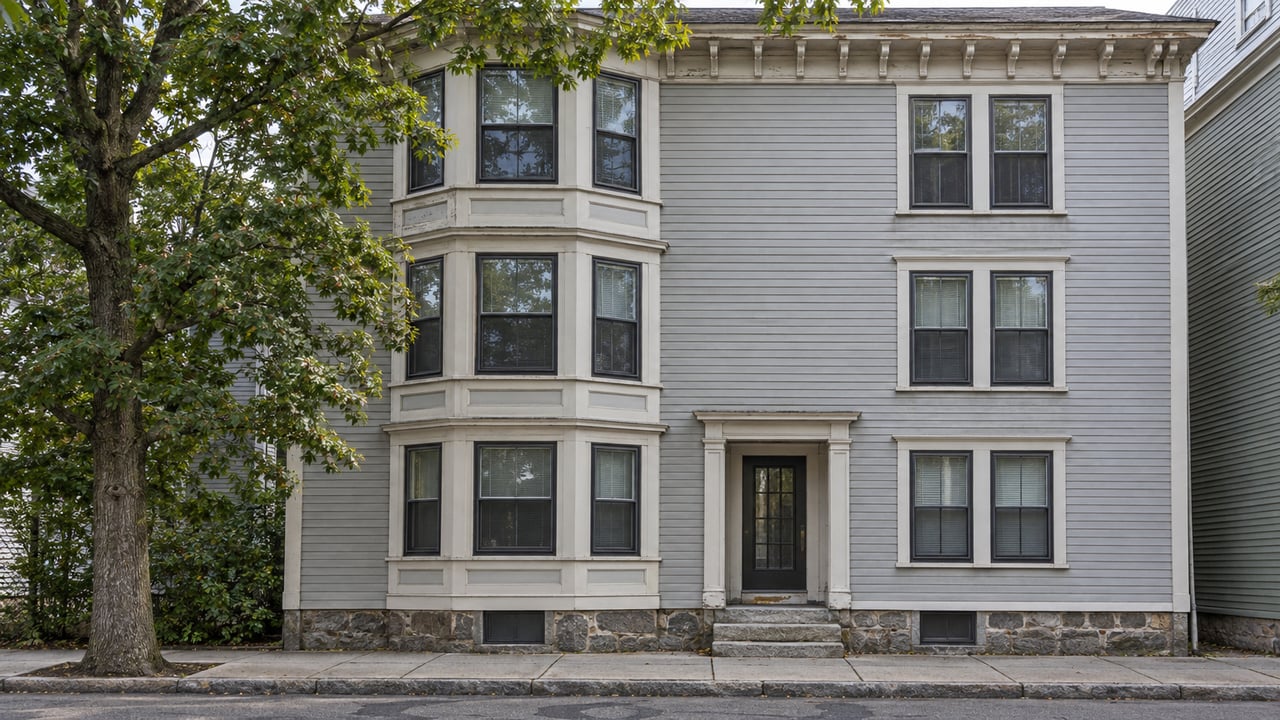
A well-maintained triple-decker in Jamaica Plain will often throw off a cap rate somewhere between 4.5 and 5.5 percent. That's roughly what a bond ladder has paid this year, which raises an obvious question for anyone weighing a seven-figure purchase against a phone call to a brokerage account: why tie up that much capital in a building with tenants, boilers and porch repairs for a return you could get without touching a toolbox.
The answer isn't in the cap rate itself. It's in what that number is measuring, and what it deliberately leaves out.
The Trade Price Nobody Puts in the Headline
Two of the more instructive multi-family closings from earlier this year show where the money actually lands. 36 Alveston Street, a six-bedroom, 3,781-square-foot triple-decker, closed at $1,835,950 in the first quarter of 2026. 47 Prince Street closed close behind at roughly $1.8 million. Both sit at the upper end of what well-kept JP triple-deckers have been trading for, a range that generally runs from $1.6 million to $2 million for buildings in solid condition.
Not every JP triple-decker commands that number. Buildings closer to Dorchester's price tier, particularly ones needing structural work or sitting further from the Orange Line, have traded in the $950,000 to $1.4 million range this year. The spread isn't a sign the neighborhood is inconsistent. It's a sign that condition, block, and proximity to Forest Hills or Stony Brook stations are doing more work than the neighborhood label on a listing sheet.
What a Cap Rate Actually Screens For
Investors who underwrite Boston multi-family seriously tend to run two checks before anything else. First comes the gross rent multiplier, dividing purchase price by annual gross rent. A GRM of 14x to 18x is typical for a well-located asset. Anything north of 22x is a flag that the price has outrun what the rent roll can justify. Second comes net operating income and cap rate, subtracting realistic vacancy, taxes, insurance and maintenance from gross rent to see what's actually left.
Run a JP triple-decker through that second screen and the output sits at 4.5 to 5.5 percent. On its own, that number reads as underwhelming. Compared to the GRM band it usually pairs with, it reads as consistent. This is what a well-located, low-vacancy building looks like when buyers aren't pricing it as a spreadsheet exercise.
| Metric | Typical 2026 range | What it tells a buyer |
|---|---|---|
| Purchase price, well-kept triple-decker | $1.6M–$2M | Reflects condition, block, and transit proximity more than neighborhood-wide demand |
| Cap rate | 4.5%–5.5% | Priced for appreciation and equity, not first-year yield |
| GRM screen | 14x–18x typical | First underwriting gut check before deeper NOI analysis |
| Active multi-family listings, late September 2026 | Roughly two dozen, median ask near $1.57 million | Thin supply keeps pricing leverage with sellers |
The Appreciation Premium, Named
Local analysis of the JP multi-family market has put a name on what the low cap rate is actually compensating for: it isn't a cash flow story, it's an appreciation premium. The three-unit building remains the most common investment vehicle in the neighborhood not because it produces strong first-year yield, but because vacancy stays low, tenant quality stays high, and the building itself keeps climbing in value while a mortgage gets paid down by rent checks.
That's also why the owner-occupant approach, buying a triple-decker, living in one unit, and renting the other two, keeps showing up as the most practical entry point for buyers who can qualify for the purchase. It isn't sold as a yield play. It's a long-term equity position that happens to come with two tenants covering most of the note.
The Demand Test
If the low cap rate signaled a bad deal, demand should be thinning. It isn't. Multi-family pendings in Jamaica Plain roughly doubled year to date through late April 2026 compared to the same stretch the year before, the kind of forward-looking signal that shows buyers committing to contracts well before those deals show up in closed-sale data.
Set that against the rest of the market for scale. Condos closed at an average of $803,000 across 95 sales year to date through early June 2026, up from $772,000 the year before, a modest but real gain. Single-family homes averaged $1.46 million across 19 closed sales over the same stretch, down slightly from $1.49 million a year earlier, essentially flat. Multi-family is the segment where buyers are willing to accept the least favorable-looking yield number and still show up in greater volume. That's not confusion. That's a market pricing the building for what happens over a decade, not what happens in year one.
Where the Renovation Math Shifted
The flip strategy that worked on JP triple-deckers a few years ago, cosmetic updates and a quick resale, has largely stopped working. The margin now sits with structural conversions: reconfiguring floor plans, finishing lower levels, and repositioning a three-family building as high-end condos rather than freshening up what's already there. That's a materially different capital and expertise requirement than a paint-and-stage flip, and buyers approaching it without conservative underwriting are the ones most likely to get burned by the scope creep that structural work tends to reveal once walls come down.
Jackson Square: The Cheaper Version of the Same Bet
For buyers priced out of the $1.6 million to $2 million band, the area worth watching sits at the JP and Roxbury border around Jackson Square. Pricing there still reflects the neighborhood's transitional status, but continued city and state investment in the area's infrastructure has put it on the short list of remaining pockets with real forced-appreciation potential. It's the same appreciation thesis that governs Sumner Hill triple-deckers, priced several years earlier in its curve.
How to Underwrite One of These Correctly
Treat the cap rate as a floor check, not a target. Run the GRM first, since a building that fails that screen rarely improves on closer inspection. Then decide, honestly, whether the strategy is a decade-long hold with an owner-occupant unit covering the mortgage, or a structural conversion with real renovation capital behind it. Either can work in Jamaica Plain right now. Buying a 5 percent cap rate expecting a 5 percent cash-on-cash return in year one is the version that doesn't.
FAQ
Is a cap rate under 5 percent too low to bother with in Jamaica Plain? Only if the goal is first-year yield. As a floor for a building in a low-vacancy, transit-connected neighborhood with a tenant pool anchored by nearby hospitals and universities, it's consistent with what similar assets have traded for through 2026. The return shows up in appreciation and debt paydown, not in the first year's cash distribution.
Does the math change if I plan to live in one unit? It changes the entire framing. An owner-occupant purchase converts the deal from an investment yield question into a long-term equity and amortization question, with two tenants offsetting most of the carrying cost. That's the structure behind most of the owner-occupant activity in JP's triple-decker market this year.
If you're weighing a specific triple-decker against these numbers, or trying to figure out whether a building penciling out at a 22x GRM is worth a second look, that's a conversation worth having before an offer goes in, not after. Boston Real Estate Pros has spent two decades underwriting exactly this kind of Jamaica Plain building. Schedule a consultation and bring the address.
This article is general information, not legal, tax or financial advice. Consult a qualified professional about your situation.